Pain relief is a crucial stage of permanent makeup. In this blog, Olena Burlachenko will talk about anesthesia for permanent makeup: the different types of anesthesia, which one is best to choose depending on the treatment area, and the top products on the PMU market.
Pain relief is one of the most important stages for client comfort during a permanent makeup procedure. It is vital to choose the right method of numbing depending on the treatment area, the client's pain threshold, and the specific effects of anesthesia on the skin. In this blog, we will discuss anesthesia for permanent makeup: the types available, which to choose based on the area, and the top products in the industry.
I will be your guide—Olena Burlachenko, speaker and instructor at Beauty Hunter LAB, brow artist, makeup artist, and permanent makeup master.
Types of Anesthesia in Permanent Makeup
For pain relief during a permanent makeup procedure, two fundamentally different types of anesthesia are used:
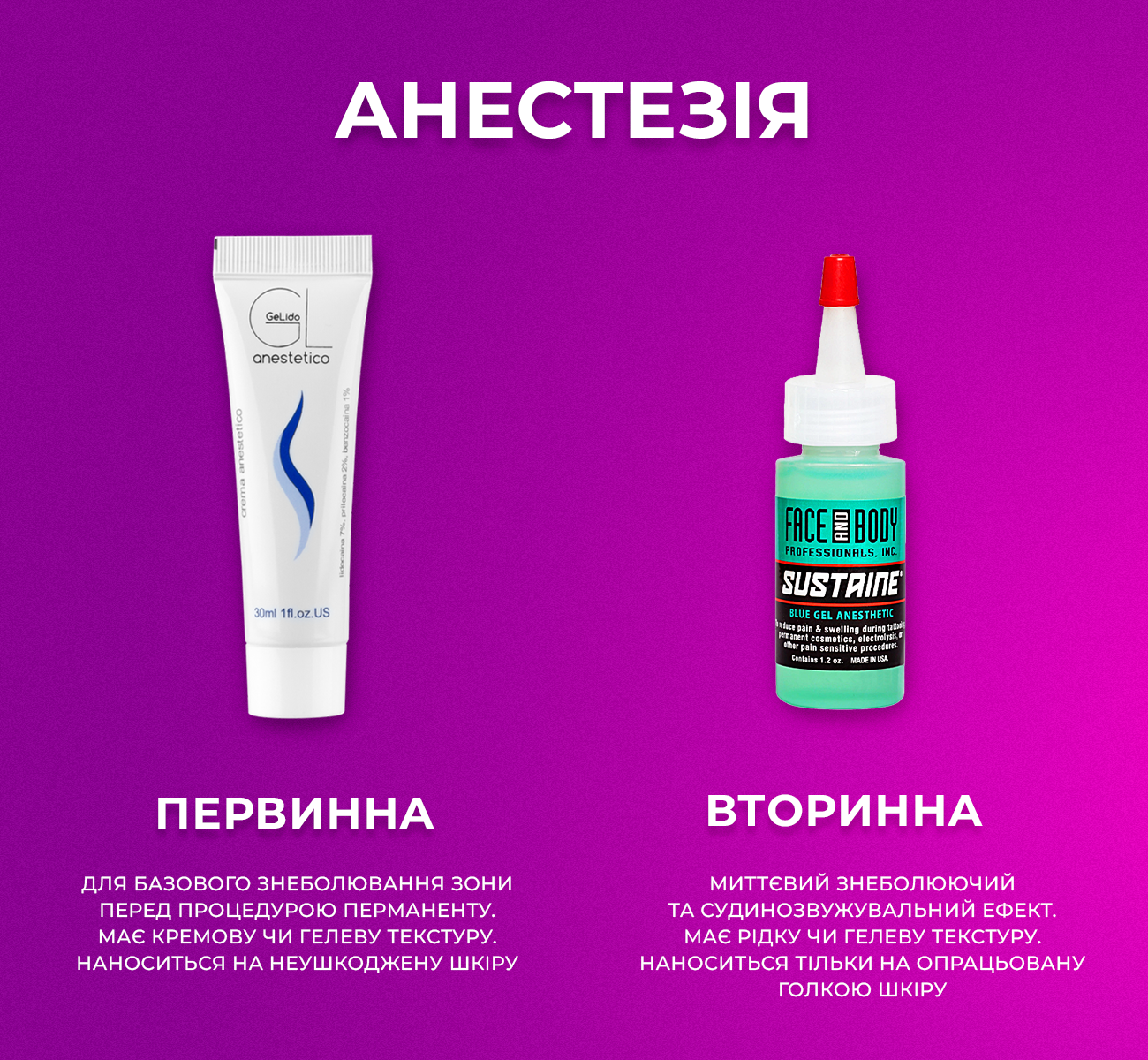
- Primary Anesthesia (also known as topical or pre-numb) is designed for basic numbing of the area immediately before the permanent makeup or microblading procedure. It usually comes in the form of creams or gels and is applied to the area for 10-30 minutes under plastic wrap before starting. It is applied only to intact, undamaged skin!
- Secondary Anesthesia is used during the procedure on skin already processed by the needle. It provides an immediate numbing and vasoconstrictive effect, as well as reducing lymph production. It has a liquid consistency, which improves its penetration deep into the skin.
Which Anesthesia to Choose for Permanent Makeup
First, it is important to understand which manipulations you will be performing and in which areas. The most common procedures are:
- eyebrow permanent makeup;
- lip permanent makeup;
- eyelid permanent makeup, interlash;
- permanent makeup touch-ups;
- permanent makeup removal with a remover.
Primary anesthesia is most often used for lip permanent makeup touch-ups, pigment removal with a remover, and when working on the eyes (eyeliner, interlash). Primary anesthesia eliminates unpleasant sensations and is ideal for those who fear pain or have a low sensitivity threshold.
It is applied to the skin beforehand for initial numbing. The exposure time can vary from 10 to 30 minutes (always read the application method recommended by the brand).
Secondary anesthesia is used directly during the permanent makeup process to ensure better numbing and an absence of discomfort. Due to its mechanism, secondary anesthesia blanches (whitens) the skin, making it easier to see how the pigment is being deposited. Secondary anesthesia only works on previously traumatized skin.
I use it during eyebrow and lip permanent makeup procedures, applying it for 5-10 minutes under wrap.
For the eyes, it is better to use a specialized anesthetic.
Eyebrow Permanent Makeup. Secondary anesthesia is used during the procedure itself. For example, Sustaine or TKTX Gel. They whiten and numb the area effectively.
Lip Permanent Makeup. Special England-KIA lip numbing wipes can be used. During the procedure, Sustaine is utilized; it does not cause excessive vascular spasms, allowing the artist to see how the pigment is being implanted.
Eye Permanent Makeup. The eyes are a very sensitive and delicate area. For this zone, it is best to use specialized eye anesthetics that do not irritate the mucous membrane, such as EYE Anesthetic Cream.
TOP Products for Primary and Secondary Anesthesia
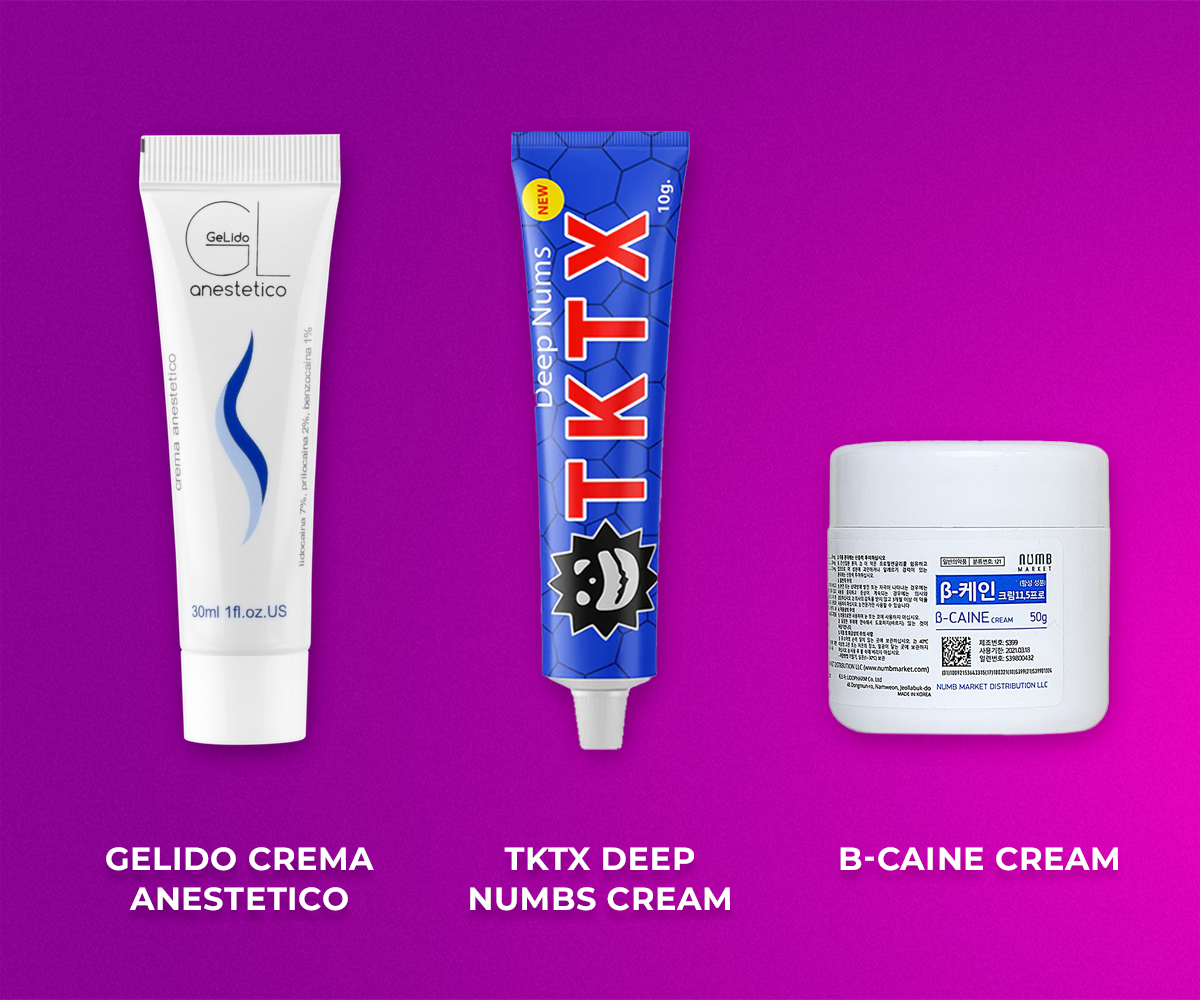
TOP Primary Anesthesia:
GeLido Anestetico - one of the best and most effective primary anesthesia products. One small tube is enough for 60-90 procedures, depending on usage. The action time is only 10-15 minutes. It is better not to apply it under wrap on thin skin.
B-caine - a powerful primary anesthesia suitable for all types of work, including permanent makeup, cosmetology, and tattoos. It can be applied without occlusion for 15-20 minutes. One jar is enough for 100-120 clients depending on usage.
Ideal for particularly sensitive clients.
Numbs well and acts for a long time.
TKTX Blue Gel 40% - a classic among permanent makeup artists. Contains lidocaine and prilocaine (5%), providing maximum numbing. Can also be used for tattooing.
TOP Secondary Anesthesia:
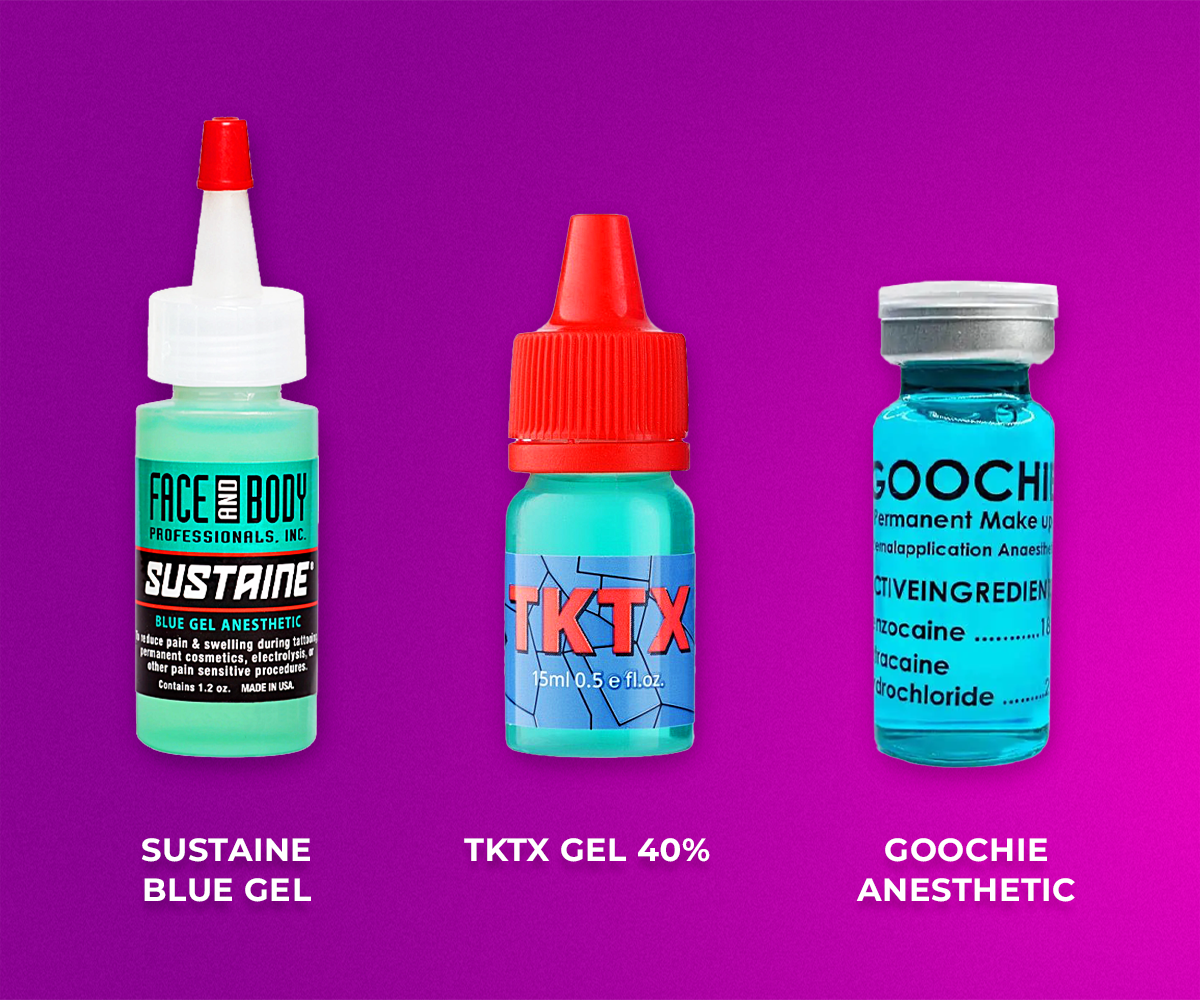
Sustaine Blue Gel - absolute love for permanent makeup. The best formula: Epinephrine, Tetracaine, Lidocaine. It does not spasm the vessels excessively and keeps the skin elastic.
Comfortable to apply to the open skin surface, very economical.
TKTX Gel - this anesthetic has a pronounced anti-edema effect due to the coagulant in its composition. It reduces bleeding and increases the healing speed of damaged skin. The anesthetic provides a long-lasting numbing effect (up to 4 hours). Contains Lidocaine, Epinephrine, Tetracaine.
Goochi - a budget-friendly option for a high-quality and effective anesthetic; it provides quick action, numbs, and constricts blood vessels.
Recommendations for Permanent Makeup Artists
- Do not apply too much secondary anesthesia; it can over-constrict the vessels and make the skin tough, which prevents the pigment from being easily implanted.
- When using any type of anesthesia, ensure the composition does not get into the client's eyes.
- Always check with the client for allergies to anesthetic components, such as lidocaine and epinephrine. The ideal scenario is to perform an allergy patch test before the procedure.
- The most powerful pain relievers are B-caine and Sustaine Blue Gel. They provide the maximum possible numbing effect without causing severe vascular spasm or swelling.
That is all from me, kitties. This was Lena Burlachenko, love you all, taking my leave.