A correctly chosen brow shape can visually change facial proportions, highlight strengths, and mask flaws. At the same time, the question of the best way to remove eyebrow hair remains relevant. Some prefer tweezers, others wax or thread. It is important to understand that each method has its strengths and weaknesses, and they can radically influence the final choice of the ideal tool.
Eyebrow Tweezing: The Pros
Tweezing is a classic and remains one of the most popular methods for creating a beautiful shape. A high-quality tool gives the technician full control over the process: you can remove each hair individually, precisely building the line without affecting adjacent areas.
The technique requires skill and refined movements. Tweezing is performed in good lighting; the skin is pre-cleansed and slightly stretched to reduce discomfort. The technician grabs the hair at the very base and pulls it in the direction of growth to avoid trauma to the follicle.
Pros of eyebrow tweezing:
- removal of even the shortest hairs that cannot be grabbed by wax or thread;
- the ability to independently correct brows between salon wax or threading appointments;
- minimization of risks of burns and irritation compared to wax.
Furthermore, tweezers are a convenient tool for home care. Many technicians advise using them between main visits to correct the shape independently. The main thing is to choose high-quality tweezers for brow correction, with perfect closure of the tips and proper sharpening.
Eyebrow Waxing: Pros and Cons
Eyebrow waxing is an excellent option for technicians with a high volume of clients. Warm or cold wax is applied to the skin around the eyebrows, capturing many hairs at once, after which it is removed in one motion along with them. The procedure takes only a few minutes, ensuring an ideally even contour.
The key advantage of the method is speed and long-term effect: new hairs do not appear for up to three to four weeks. In addition, wax removes even vellus (peach fuzz) hair, making the skin look smoother and the line clearer.
However, it is important to remember the other side of the coin—the pros and cons of eyebrow waxing should always be considered comprehensively. Common disadvantages include the risk of irritation for those with sensitive skin prone to couperose or allergic reactions. Another minus is that wax cannot depilate short hairs that it simply cannot catch.
Today, eyebrow waxing remains one of the most popular methods in salons. If the wax temperature is correct and the technician works carefully, the procedure is fast, safe, and predictable.
Many specialists combine wax with tweezers—first, they remove the main volume of hair with wax, and then refine the shape manually.
Threading
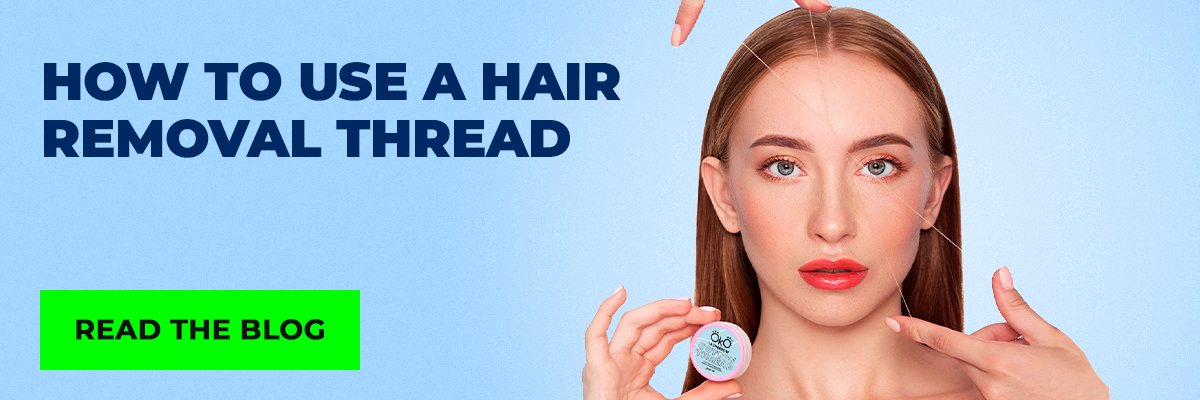
The threading technique, also known as brow correction with thread, came to us from the East and is considered one of the most effective. The technician uses a cotton or silk thread, twisted in a special way to capture even the finest and shortest hairs at the very base. Thanks to this, the method does not traumatize the skin and removes hairs along with the bulb, which makes the result longer-lasting than with tweezing.
Among the obvious pros of threading:
- precision;
- lack of irritation;
- the ability to work on even the most hard-to-reach areas.
Among the cons—the need for experience and skill on the part of the technician, as any wrong move can lead to negative results. Moreover, the thread does not always effectively handle very coarse hairs, and the procedure itself takes more time compared to waxing.
Nevertheless, for clients with sensitive skin, the answer to the question of what is better—threading or tweezing—is unequivocal: threading. The method is less traumatic and does not cause irritation even with regular use.
Which eyebrow hair removal method is best?
In reality, there is no universal answer to the question of which method is ideal for everyone. Every method, whether it's eyebrow correction with wax, tweezers, or thread, has its own features and depends on a multitude of factors:
- hair density;
- skin sensitivity;
- pain threshold.
Experienced technicians choose the technique individually. For example, if the skin is sensitive and prone to redness, it is better to prefer tweezers or threading. For thick brows with coarse hairs, wax is suitable, as eyebrow waxing quickly and cleanly removes all excess. Sometimes specialists combine several techniques to achieve an ideal shape without irritation.
The main thing is to understand the advantages and disadvantages of each technique, as the comfort and quality of the result depend on this.
Brow shaping technique
The correct eyebrow shaping technique is primarily based on the architecture of the face. First, the technician determines three key points of the eyebrow:
- start — the head;
- the arch — the bend;
- the end — the tail.
The start should align with the line of the wing of the nose, the arch with the outer edge of the iris, and the tail with a line drawn from the wing of the nose to the outer corner of the eye.
Hair should be removed in the direction of growth to prevent the problem of ingrown hairs and micro-traumas. The optimal plucking angle is about 30–40°, where the hair is pulled smoothly, not jerkily. You should categorically not remove hairs above the brow—only under the bottom edge and between the brows.
Before the procedure, the skin is cleansed, and afterward, it is wiped with an antiseptic and a soothing agent is applied. This reduces the risk of inflammation and redness.

How to soothe the skin after the procedure
After any eyebrow epilation, the skin becomes hyperemic and sensitive. To recover faster, it is recommended to use an alcohol-free antiseptic, for example, chlorhexidine, and then apply a soothing gel with aloe vera or panthenol. These products reduce irritation and prevent the appearance of inflammation.
If the sensitivity threshold is high, you can apply a cool compress or an ice cube wrapped in a wipe. Within 24 hours after the procedure, it is advisable not to use decorative cosmetics in the treated area, and also not to sunbathe or visit a sauna.
Tweezers aren't grabbing hairs — what to do?
The problem of tweezers not grabbing hairs is common even among professionals. The main reason is incorrect sharpening and loose closure of the tool's tips. Tweezers must grab the hair at the very base without slipping or breaking it.
If the tool is not doing its job, it can be sharpened or replaced. It is also important to wipe the tweezers with an alcohol solution after each procedure to remove skin oil residues that affect grip.
Which tweezers are best for brow correction?
When choosing tweezers, it is worth paying attention to the material and the shape of the tips. The best options are medical-grade stainless steel with a matte finish that doesn't slip in the hand.
The classic slanted shape is considered the most universal: it allows you to gently hook the hair and pull it out by the root without damaging the skin.
The straight shape is suitable for working with thick brows, while the pointed shape is for spot correction and removing vellus hair. The main thing is that the tips must close perfectly, without gaps. Then the tweezers will last a long time and work flawlessly.