Opening your own space is an important and responsible step for every beauty professional striving to reach a new level of development. In this blog, Beauty Hunter has gathered important aspects that will help you be ready to open your beauty cabinet, salon, or beauty bar.
Many professionals eventually come to the thought: "What if I no longer want to work for someone else and want my own space where everything is exactly as I and my clients like?"
Having your own beauty cabinet is a step toward independence, personal brand development, and income growth. However, like any business, there are nuances that are better to think through in advance.
Determine the concept and format of your beauty space
Before opening your cabinet, it is important to clearly understand which work format you want to implement. All subsequent steps depend on this:
- choice of premises;
- purchase of equipment;
- selection of materials and promotion.
If you are planning a cabinet for one professional, the advantages are obvious:
- low starting investment;
- lower expenses for rent and utility bills;
- full control over processes and the client base.
There are risks, too — you are fully responsible for the flow of clients, marketing, and income. This format is ideal for professionals who are just starting and want to test their strength without investing large sums.
If you are considering a mini-studio where several professionals work, there is an opportunity to offer comprehensive services to clients. For example, one space can combine manicures, pedicures, brow shaping, eyelash extensions, and facial care. This increases the average check and attracts new clients through cross-selling. But at the same time, it is necessary to think through the interaction of the professionals, work schedules, zones for each specialist, and the organization of the common space.
When choosing a concept, it is also important to consider your target audience. Do you want to work with regular clients, building a personal brand, or are you aiming for a flow of new clients? Are you planning to provide premium services at high prices or affordable procedures for a wide audience? The answers to these questions will help determine the studio design, selection of equipment, and price level.
The design and atmosphere are no less important: even a small cabinet should create a feeling of coziness and professionalism. A comfortable chair for the client, correct lighting, cleanliness, and a well-thought-out interior — all of this influences the visitors' impression and their desire to return again.
Tip: Before launching, create a mini-plan of the concept where you specify the studio format, list of services, target audience, advantages, and potential risks. This will become your guide and help you avoid mistakes at the start.
What documents are needed to open a beauty cabinet in Ukraine?
The legal side is often put off "for later," but that is a mistake. Without it, work turns into a constant risk: from fines to the closing of the cabinet. To avoid this, you need to take several mandatory steps:
Registration of activity and choice of KVED codes
The optimal option for a professional is to register as a FOP (Sole Proprietorship). It is inexpensive and fast: registration takes a few days, and accounting can even be managed independently via online services. When registering, it is important to correctly indicate the KVED codes that correspond to the types of activity. For example:
- for manicure and pedicure technicians, use code 96.02 "Provision of services by hairdressers and beauty salons";
- for cosmetic procedures, you can add 96.04 "Activities for ensuring physical comfort";
- for massage — 86.90 "Other human health activities" (provided there is medical education and a license).
Official work through FOP allows you to connect a card terminal, an online cash register, and issue receipts. Many people prefer to pay for services by card, and the ability to conduct non-cash payments will become your competitive advantage.
Taxation system
Most often, professionals work on a simplified system of group 2 or 3. This format allows you to officially accept payment, legally maintain accounting, and does not overload you with complex reporting.
Sanitary requirements
After finalizing the legal part, it is worth taking care of compliance with sanitary standards, as they will become the basis for client trust and peace of mind during inspections. A beauty cabinet must meet sanitary requirements. Key points:
- a separate place for tool sterilization;
- the presence of a sterilizer and disinfectant solutions;
- convenient access to water and sewage;
- use of disposable consumables (wipes, gloves, masks);
- maintenance of a disinfection and sterilization log.
Lease agreement
If you are not working at home, but are renting premises, be sure to sign an official lease agreement. It should clearly state the right to use the premises for beauty activities. This will protect you from potential conflicts with the landlord and will become additional confirmation of your legality.
Choosing a location: what is important to consider
The premises are the business card of your cabinet. A client can forgive a lot, but if it is inconvenient to get there or the environment leaves much to be desired, they are unlikely to return a second time.
What is important:
- Location and foot traffic. Ideally, if there is a subway station, bus stop, or a popular street nearby. Convenient access and parking are a huge plus.
- Zoning. Even a small room must be smartly divided: the professional's workspace, a waiting area (even if it's just a small chair and a side table with a magazine), and a place for storing materials and sterilization equipment.
- Conditions. Light, ventilation, water, bathroom — basic things without which comfort is impossible. Especially lighting: high-quality light is important not only for the professional's work but also for creating the right atmosphere.
When choosing premises, it is worth considering different lease formats. Professionals have several options:
- Work in your own apartment. This option is suitable for beginner professionals who, at the start, cannot yet afford extra expenses.
- Rent a space in a beauty salon. A good way to start and immediately enter a client flow.
- Rent separate premises in a business center or on the ground floor of an apartment building.
Each format has its pluses: a salon already has a flow of clients and basic equipment, separate premises provide more freedom and status, and working from an apartment helps reduce costs at the start.
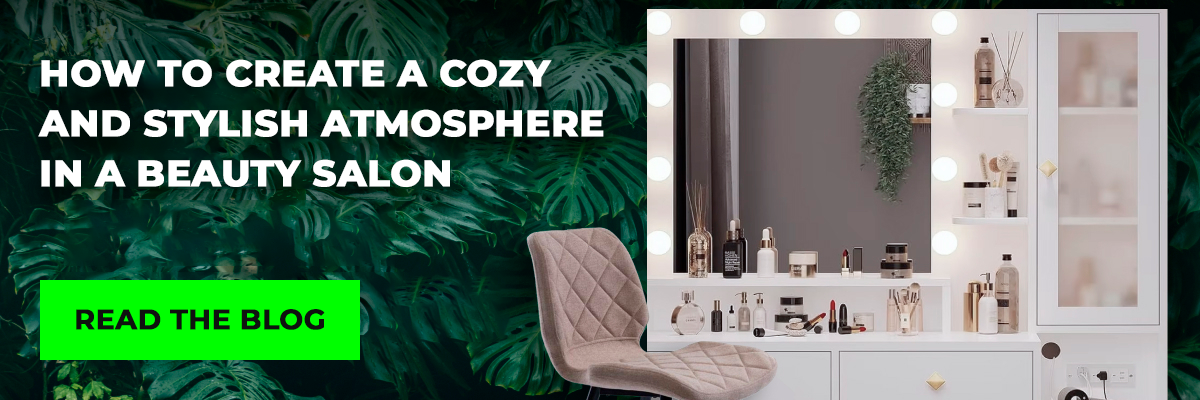
Equipment and furniture for a beauty cabinet or studio
Choosing equipment is not just a matter of aesthetics, but the basis of your comfort and the quality of your services. It is worth investing here first and foremost, because your health and the impression of your clients depend on the convenience of your workspace.
- Work chair or couch. If you are planning manicures and pedicures, you will need a comfortable chair with height and tilt adjustment. For cosmetology and lash care, it is better to choose a professional couch with soft upholstery and a headrest. The client should feel comfortable, especially during a multi-hour procedure.
- Tables and lamps. A manicure table must be stable, with a dust extractor and a place for storing materials. Lighting is a separate topic: choose LED lamps with brightness adjustment and cold light that does not distort the colors of the coatings. There is also a separate direction of "shadowless lamps"; this applies the principle of multi-directional lighting, such light is soft and even.
- Cabinets and storage systems. All consumables and tools must be kept in order: separate containers for sterile tools, closed cabinets for chemicals, convenient shelves for different materials. This saves time and creates a feeling of professionalism.
- Sterilization equipment. The minimum is an ultrasonic cleaner and a dry heat sterilizer. Without this, it is impossible to comply with sanitary standards. Think also about kraft bags for tools with a sterility indicator — this inspires trust in clients.
- Client zone. A side table with water, a comfortable sofa or chair in the waiting area, magazines, or a tablet for entertainment — a small detail that helps create a salon atmosphere, even if it's a small cabinet.
Materials and consumables for work and client comfort
Purchasing materials is another basic step that directly affects the quality of work and your reputation.
- Materials for procedures. At first, it is better to purchase a minimal set that includes the basic products necessary for starting your beauty services. It is better to immediately choose several brands of different price categories to satisfy different client requests. Over time, the assortment can be expanded taking into account trends, client requests, etc.
- Disposable consumables. Gloves, masks, files, buffers, wipes, cotton pads, brushes, bed sheets, etc. — all this must be in sufficient supply. Remember: saving on consumables is noticeable to the client and raises doubts about the level of service.
- Care products. All kinds of oils, professional creams, nourishing masks — the small details that make a procedure complete.
- For client comfort. Clean towels, an aromatic candle or diffuser, a cup of coffee or tea — what turns a visit into a pleasant ritual. Clients return not only for the result but also for the atmosphere.
Tip: Keep an electronic or paper record of consumables so you always know when you need to replenish your stock.
Think through marketing and promotion for your beauty studio
Even the most stylish cabinet and professional services will not bring clients if no one knows about you. Marketing is not a one-time promotion, but constant work on your image and visibility. First of all, it is important to develop a personal brand: your social media should not just be a showcase of your work, but reflect your style, values, and approach to the client. High-quality "before and after" photos, videos of procedure processes, useful tips — all this creates trust and generates interest.
One should not underestimate the power of word-of-mouth. Satisfied clients will recommend you to friends, colleagues, relatives, and it is these recommendations that bring a constant flow of clients. To stimulate recommendations, you can gently motivate — for example, with a small bonus for an invited friend.
Promotions for first-time clients also work great, especially at the start. But it is important that they do not devalue your work. A discount on the first visit or a gift with a comprehensive service creates a pleasant experience from your work, while maintaining the master's level of professionalism.
Online promotion remains one of the most effective ways to make yourself known. Regular posts on Instagram and Facebook, high-quality content, targeted advertising in your district — all this helps to attract exactly those people who can become regular clients. Even local offline methods, like business cards with a QR code to Instagram, can give a noticeable result, especially if placed competently in places with high foot traffic of your target audience.
All together, this creates a presence effect: a potential client sees that you are a professional, understands your value, and gets a feeling of trust even before the first visit. The main thing is regularity and consistency: it is important that your marketing works every day, even in small steps.
Prepare a financial plan and calculations
Finance is the foundation of your beauty cabinet. Without a clear understanding of how much it costs to open a studio and how much you need to earn, you risk burning out quickly or facing unexpected problems. Start with calculating starting investments: this includes:
- rent or renovation of premises;
- purchase of furniture and equipment;
- purchase of materials and consumables;
- advertising and marketing for the launch.
Even for a mini-cabinet, the amount can be substantial, so it is important to understand in advance how much money you will need and to have a reserve for the first months of work.
Next, calculate monthly expenses:
-
rent;
-
utility bills;
-
material replenishment;
-
consumables;
-
taxes;
-
online services, advertising.
Many technicians at the start may have expenses almost equal to their income, so it is important to understand where you can optimize costs without losing quality.
The next step is determining the break-even point. Think about how many procedures you need to perform per month to cover expenses. This will help correctly set prices and understand which services are more profitable. When calculating the cost price, take into account all consumables and materials that you use for one procedure, as well as your time. This way, you will be able to form a price list that is simultaneously attractive to clients and profitable for you.
A financial plan is not just numbers. It is a tool that helps in making decisions: whether to expand, whether to invest in advertising, whether to hire another technician. Planning allows you to work calmly, without stress, and gradually build a profitable business.
Believe in yourself on your path of beauty development
Finally, the most important thing is your motivation and confidence. Opening your own cabinet is a challenge; sometimes you will have to face difficulties, review strategies, and find new ways to attract clients. But if you believe in your skills, value your clients, and constantly develop, the results will not keep you waiting.
Believe in yourself, create comfort for clients, and do your work with love! This is the most reliable investment in your success!