We have prepared a guide on the correct selection of rollers for lash lamination. What types of curves and shapes of rollers are there? How to evaluate a client's initial data? And which rollers to choose — read in the article by Anna Sakovska.
Hello everyone! Anna Sakovska here again, brow artist, lamimaker, and instructor at Beauty Hunter LAB, and we continue with the topic of lash lamination.
In the previous article, "TOP 5 Rollers for Lamination," we broke down the most successful models of lash rollers that will satisfy all the needs of both working and beginning masters.
Today, we'll talk about a pressing topic — how to select lash lamination rollers for a specific client. Yes, a truly pressing one! As an instructor, I very often find that masters sincerely do not understand which roller suits whom.
And this is not surprising, as the market is currently filled with a vast variety of rollers that differ in shape, curve, color, and material.
I have prepared a guide for you on selecting rollers for lash lamination. Let's get started!
What types of rollers are there by shape and curve?
First of all, it's necessary to understand some of the differences between rollers.
Rollers have different curves:
- Rounded rollers for a "baby curl." If you put the rollers together, they form a circle.
- Flat rollers for a lifting effect. If you put them together, they form an oval.
Also, rollers can have a flatter or a more anatomical shape. This is immediately visible when you hold the rollers; anatomical rollers immediately follow the natural curve of the eyelid.
The main criteria when selecting rollers for lash lamination are:
- The client's natural lash curve;
- The shape of the client's mobile eyelid;
- Eyelid hooding (an additional factor that slightly affects the work).
How to correctly select rollers for lamination?
- Analyze the client's initial data.
This is the foundation of your work and a good result. An individual approach to the client is essential. - Determine the direction of lash growth
Lashes can:
— Grow straight (straight-growing lashes). Look at the client directly; if you can barely see the lashes because they "disappear," then the lashes are straight-growing.
— Grow downward (downward-growing lashes). When looking at the client directly, the lashes are angled down and cover the eye like curtains.
— Have a natural curve. The lashes point slightly upward and have a natural, smooth curl.
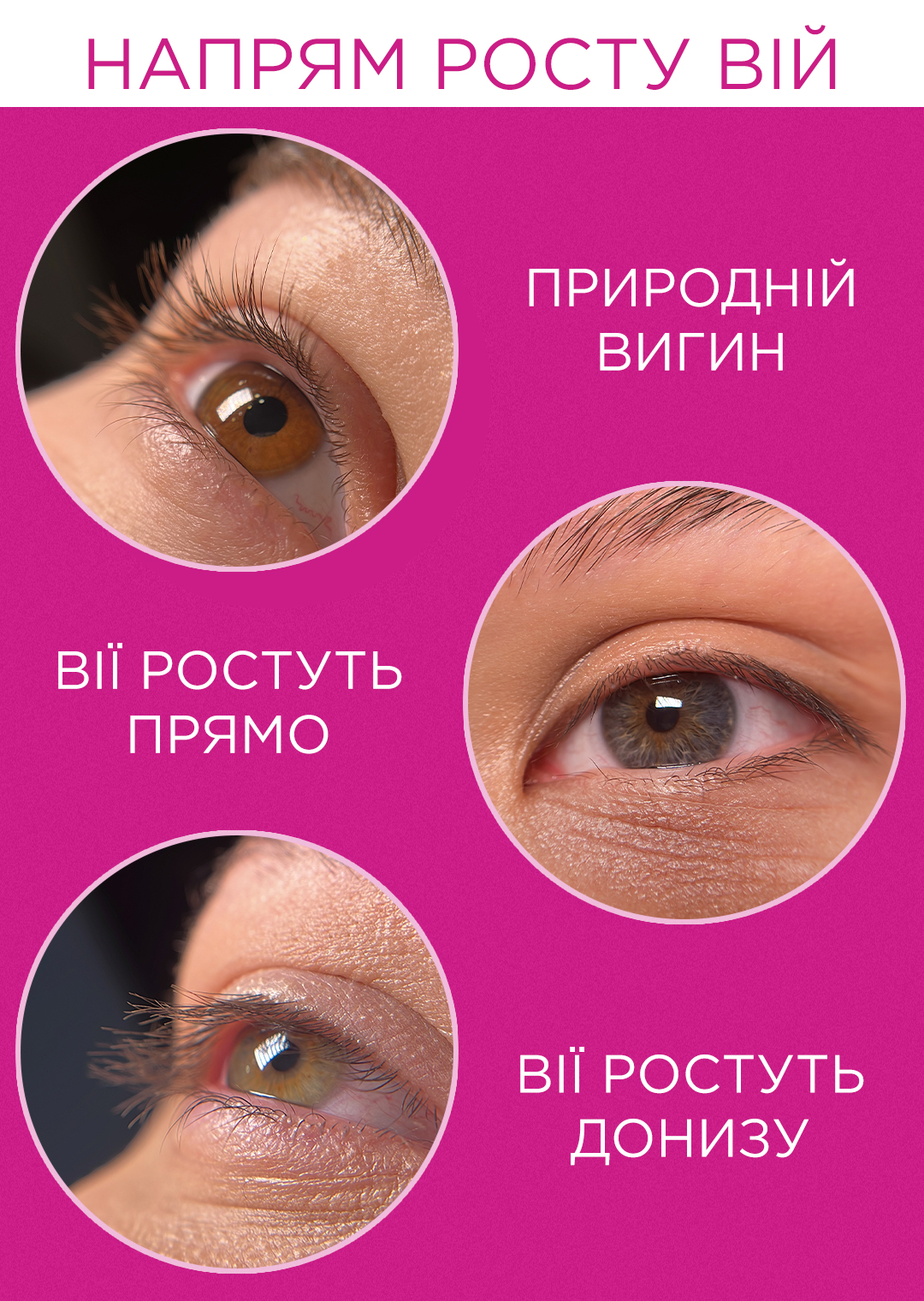
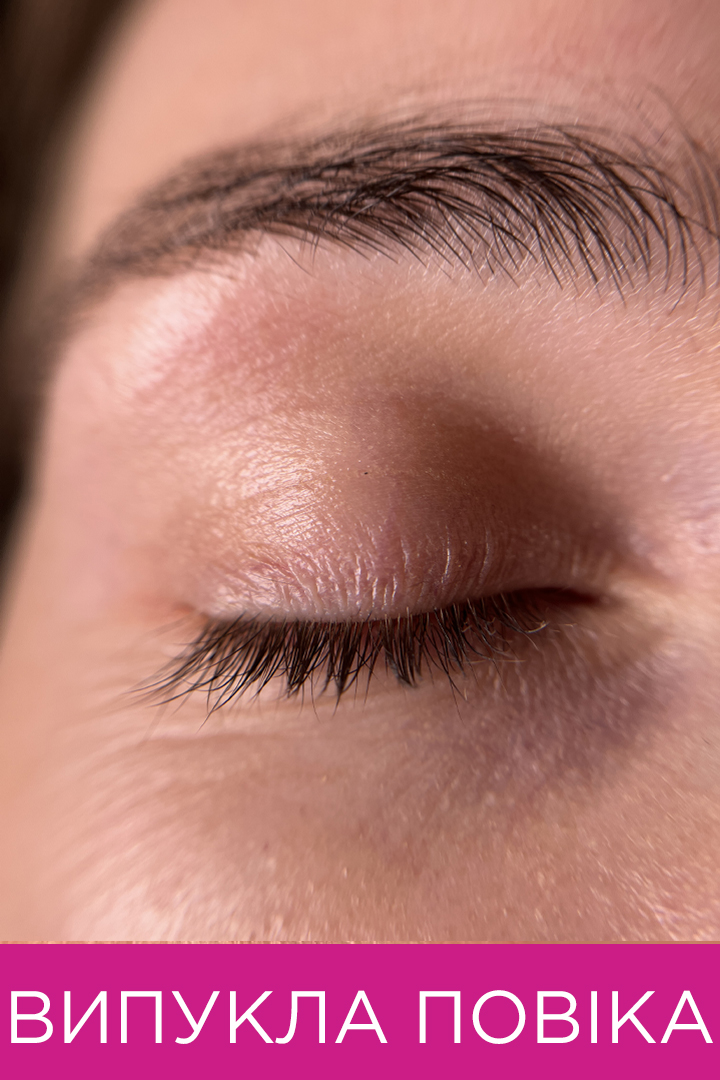
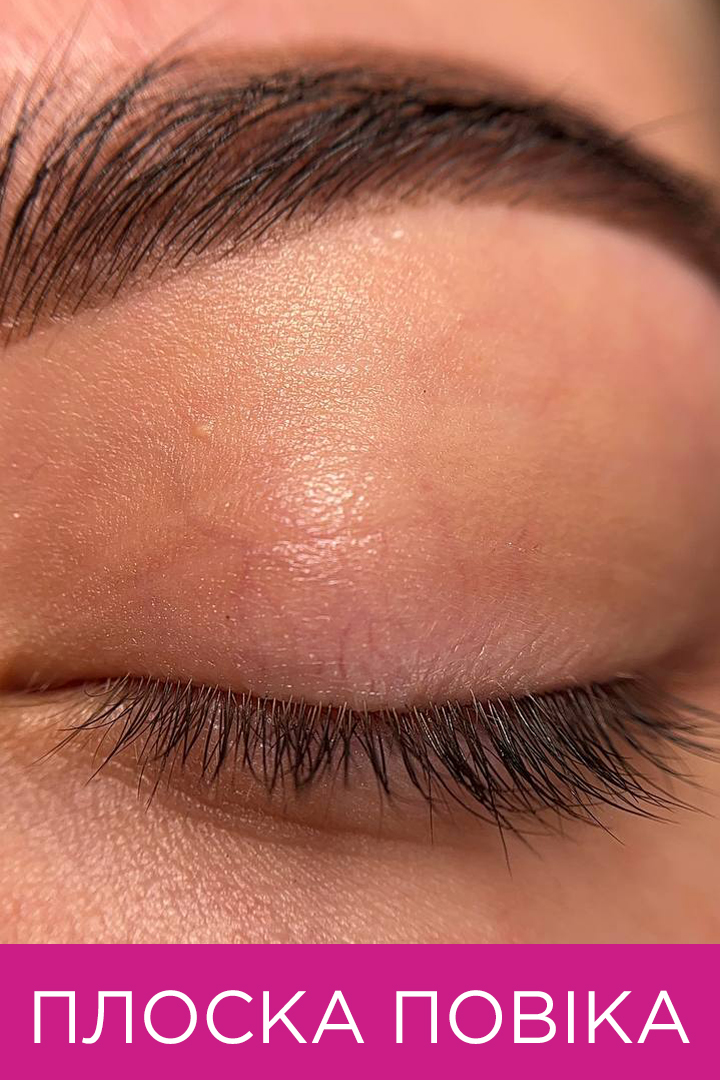
- Determine the client's eyelid shape: prominent or flat.
When working with a prominent eyelid, keep in mind that during the process, the outer and inner corners of the rollers may lift, which will definitely negatively affect the final result.
- Choose the appropriate rollers based on the client's initial data.
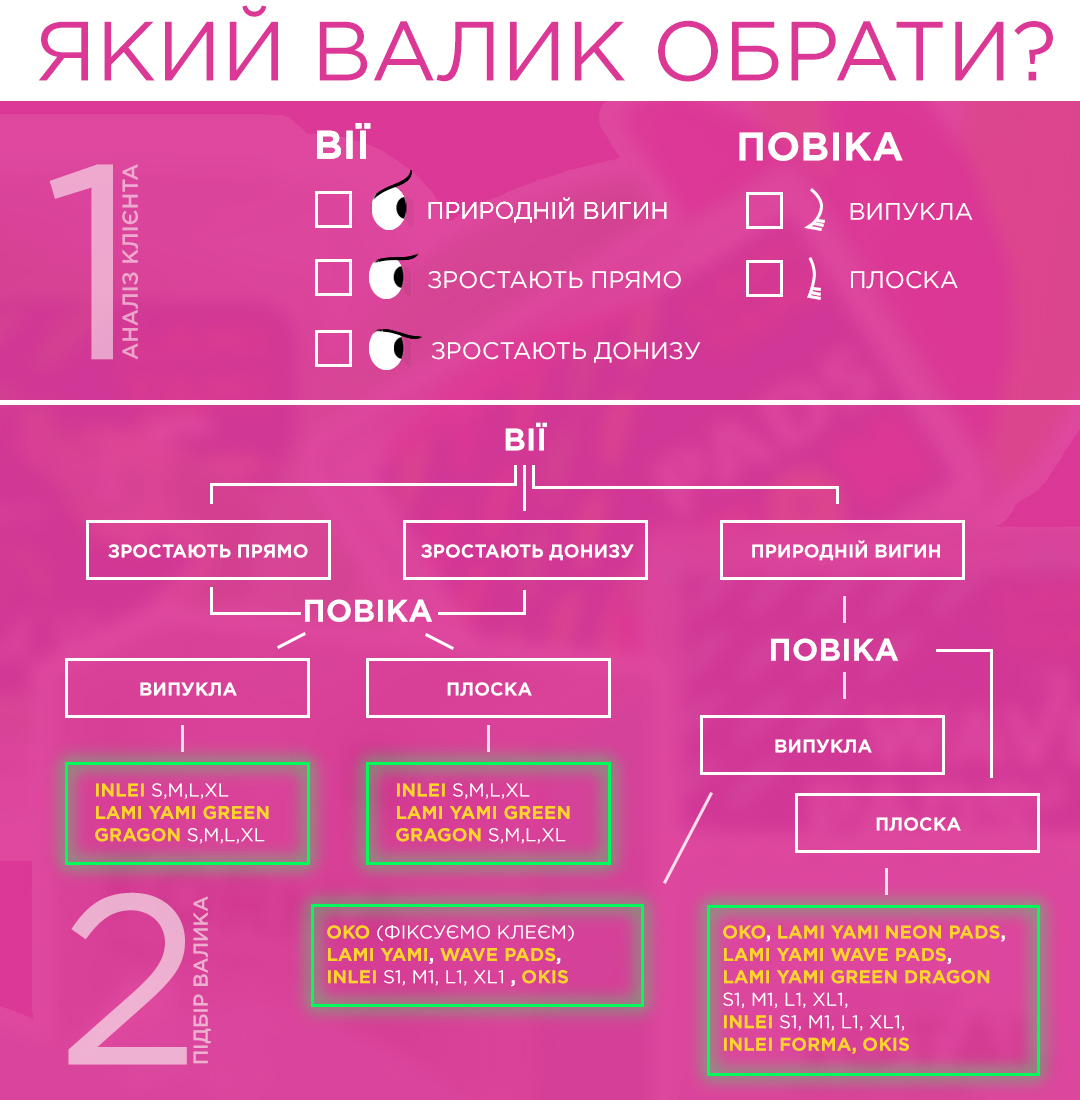
For lashes growing straight or downward, choose rounded rollers.
(Inlei Only, Lami Yami Green Dragon sizes S, M, L, XL);
For lashes with a natural curve, choose flat rollers.
(OKO, Lami Yami Wave Pads, Lami Yami Neon Pads, Lami Yami Green Dragon sizes S1, M1, L1, XL1, Inlei Only1, Inlei Forma, Okis);
Almost all rollers are suitable for a flat eyelid.
For a prominent eyelid, choose rollers with a more anatomical shape.
(Inlei Only and Only1, Lami Yami Green Dragon sizes S, M, L, XL, Lami Yami Wave Pads, Okis) - If the client has a hooded upper eyelid, fix it with tape so it doesn't interfere with the roller placement.
- If necessary, use lamination glue to fix the rollers onto the eyelids.
To make it easier for you to navigate, we have created a lamimaker's checklist. Memorize it, save it to your phone, print it out, or stick it in a convenient corner of your workspace.
By the way, many of these rollers are featured in the "TOP 5 Rollers for Lamination" review, go check it out.