A client returns not only for a quality service but also for comfortable interaction with the artist. In this article, we will tell you how to build effective communication and trusting relationships with a client, resolve or avoid conflicts, and create a comfortable atmosphere during the procedure.
Hello to all creators of beauty and aesthetics!
A beauty artist is a professional in their field and a bit of a psychologist. After all, a client returns not only for a quality procedure but also for comfortable communication with the artist. In this article, we will tell you how to build effective communication and trusting relationships with a client, resolve or avoid conflicts, and create a comfortable atmosphere during the procedure.
Rules for effective communication with a client in the beauty industry
First and foremost, it is important to understand that every person is an individual, and the approach should be tailored accordingly. Some open up easily and enjoy chatting during the procedure, while others prefer silence and minimal conversation.
Beauty Hunter has prepared several tips on how to find the right approach to clients.
Understand the client's mood and emotions
One of the main aspects of working with clients is developing empathy and emotional intelligence. If you learn to understand a client's emotions and react to them correctly, it will have a positive impact on your interaction with every client.
For example, if an extroverted client comes to you, you should immediately recognize that this person is emotional and communicative, so be prepared to keep the conversation going during the procedure.
If an introverted client comes to you, it is important to be more reserved in your communication. Overly active conversations can be uncomfortable for an introvert. The best option is to keep the conversation calm and measured, or allow the client to stay in their comfort zone if they do not wish to engage in a dialogue.
Also, consider the client's mood, as even the most positive person may not be in the mood to talk. A person in a bad mood may be prone to conflicts or a biased assessment of your work. It is important to remain polite and positive in your communication. Remember that you can be that very positive moment that improves the client's day.
Listen more and actually hear your client
Your task is not just to listen, but to understand the client. Using active listening techniques, such as repeating or clarifying what was heard, as well as providing feedback, will help the client feel comfortable – knowing they are being heard and understood.
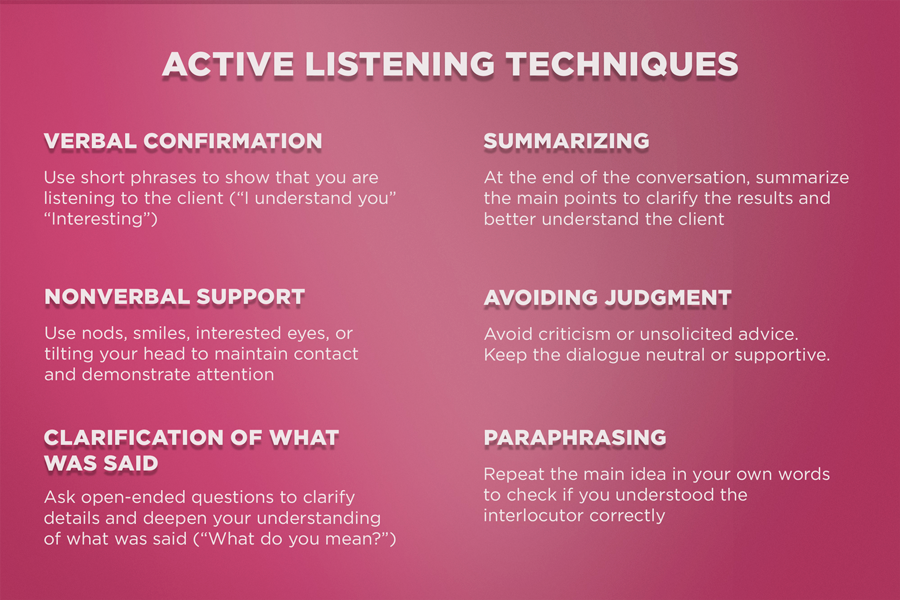
Maintain a balance in the communication between the artist and the client. Let's imagine it in terms of a ratio: the client should lead 70% of the conversation, and the artist 30%. This way, the client will understand that they are being listened to and that you are ready to hear them.
Build your communication so that it does not boil down to a question-and-answer format, like in school. Add everyday topics to the conversation. This will help you get closer to the client and earn their trust.
It is important to stick to appropriate (neutral) topics when communicating with a client! There are several topics in professional ethics that should not be discussed with a client or in their presence:
- politics;
- religion;
- personal and intimate life;
- discussion of other clients or staff;
- incorrect comments about the work of other artists or the places where you work.
Create a comfortable psychological atmosphere
Psychological comfort is an extremely important aspect of the work. This includes friendliness, politeness, and a positive attitude from all staff. It influences the overall atmosphere of the studio. Physical comfort for clients is also important: comfortable chairs, a comfortable temperature, pleasant music, tea or coffee, aromatherapy (optional). All this can significantly increase the level of client satisfaction.
Beyond the procedure, you are creating a certain service that can become your signature trait for the client.
Personalize your service
Every client wants to feel special. Show them this individuality. How do you do that? Keep personal notes about the client (e.g., allergies, tinting formulas, procedure preferences, birthday). This will create a sense of care and attention.
Implement loyalty programs, such as discounts or special offers. They often encourage clients to return to the salon. Offer bonuses for recommending new clients or for repeat visits. This will attract new clients and increase the loyalty of existing ones.
Enhance your professionalism and share it
To maintain a high level of service, it is necessary to constantly learn and develop, both in the professional sphere and in communication. Constant growth is an integral part of any profession in the beauty industry. Clients should know that their artist is improving and can offer new technologies and procedures.
Regular training sessions and seminars on psychology, communication, and stress management will help you improve your skills and be more effective in working with clients.
Establish feedback with clients
Feedback is an ideal method for identifying the strengths and weaknesses of your service. It is important not just to collect reviews, but also to react to them by implementing changes. This will help clients understand that their opinion is valued and will strengthen long-term relationships.
What to do in case of a conflict situation?
Conflicts with clients are a normal part of the job. A managed conflict can be resolved without consequences for further interaction. The main thing is to remain calm and follow certain steps.
Main causes of conflicts in beauty salons:
- misunderstandings with the artist or staff;
- dissatisfaction with the level of service;
- expectations not matching the service result;
- disputes about cost.
How to resolve a conflict:
- Stay calm and avoid rash reactions.
- Control your emotions and aim for a constructive dialogue.
- Offer options for resolving the conflict.
- Thank the client for their feedback and assure them that you are ready for a dialogue.
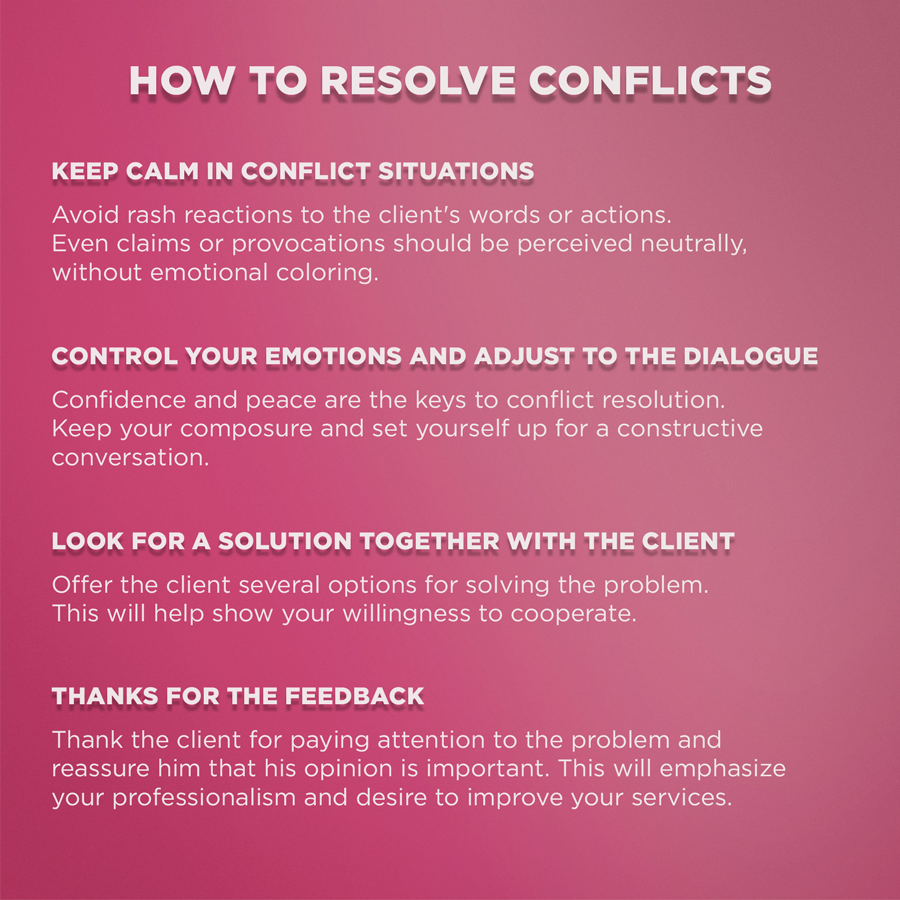
Conflicts resolved correctly strengthen the artist's authority and increase client loyalty.