Eyebrow lightening and bleaching is a trend among brow artists and often a technologically necessary procedure to achieve the desired result. In this blog, we have collected the most in-demand and proven products for eyebrow lightening and bleaching.
Peace and beauty to all beauty hunters!
Eyebrow lightening and bleaching is a kind of trend among professional brow artists and, moreover, is often a technologically necessary procedure to obtain the desired result. In this blog, we have collected the most in-demand and proven products for eyebrow lightening and bleaching.
Every brow artist may face several tasks in their work:
- Lightening eyebrows by several tones;
- Bleaching eyebrows;
- Removing artificial pigment from the hairs (color removal of previous tinting).
Lightening helps to raise the Level of Depth (UHT) by several tones, while bleaching is the complete removal of pigment from the hairs. The need for color removal arises when you need to take out artificial pigment after previous tinting and return the eyebrows to their natural shade. We will definitely cover this topic in one of our next blogs.
It is important to understand that technologically, these are completely different procedures that require different products.
Eyebrow Lightening Products
Products for lightening and bleaching eyebrows can come in the form of powders or pastes. They must always be mixed with an oxidant, because it is the oxidant that determines how much the hair will lighten (a 3% oxide allows raising the shade by 1-2 tones; for stronger lightening or bleaching, a 6% oxide or higher is required).
We have selected the most popular and proven eyebrow lightening products for you:
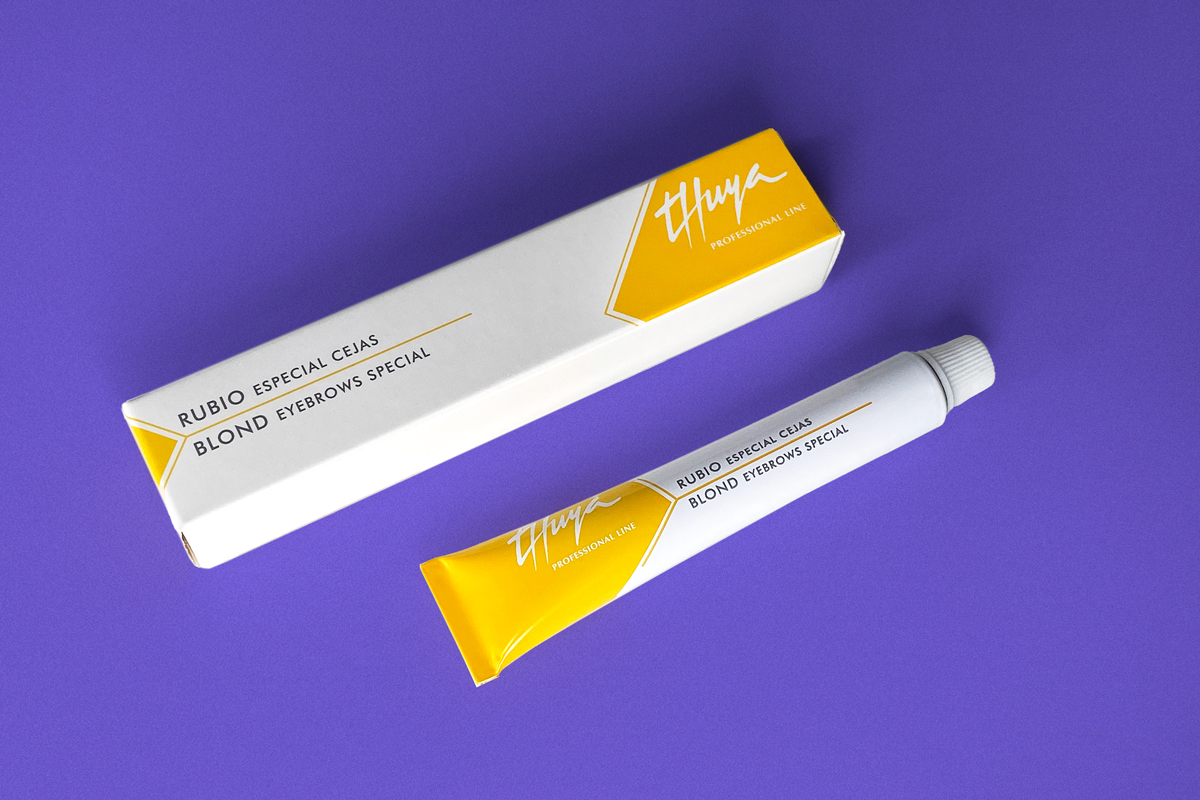
Thuya Eyebrow Lightening Paste
Used only for working with natural hair. Lightens up to 3 tones. It has a fairly aggressive effect. It can slightly clean previously tinted hair, but only by half a tone to one tone, leaving a warm undertone. After lightening, you can tint immediately, after applying eyebrow conditioner for 10 minutes to restore the structure.
The paste must be mixed with Thuya oxidant in a 1:2 ratio (1 part paste and 2 parts oxide), whisking well until completely smooth. Exposure time is from 3 to 7 minutes.
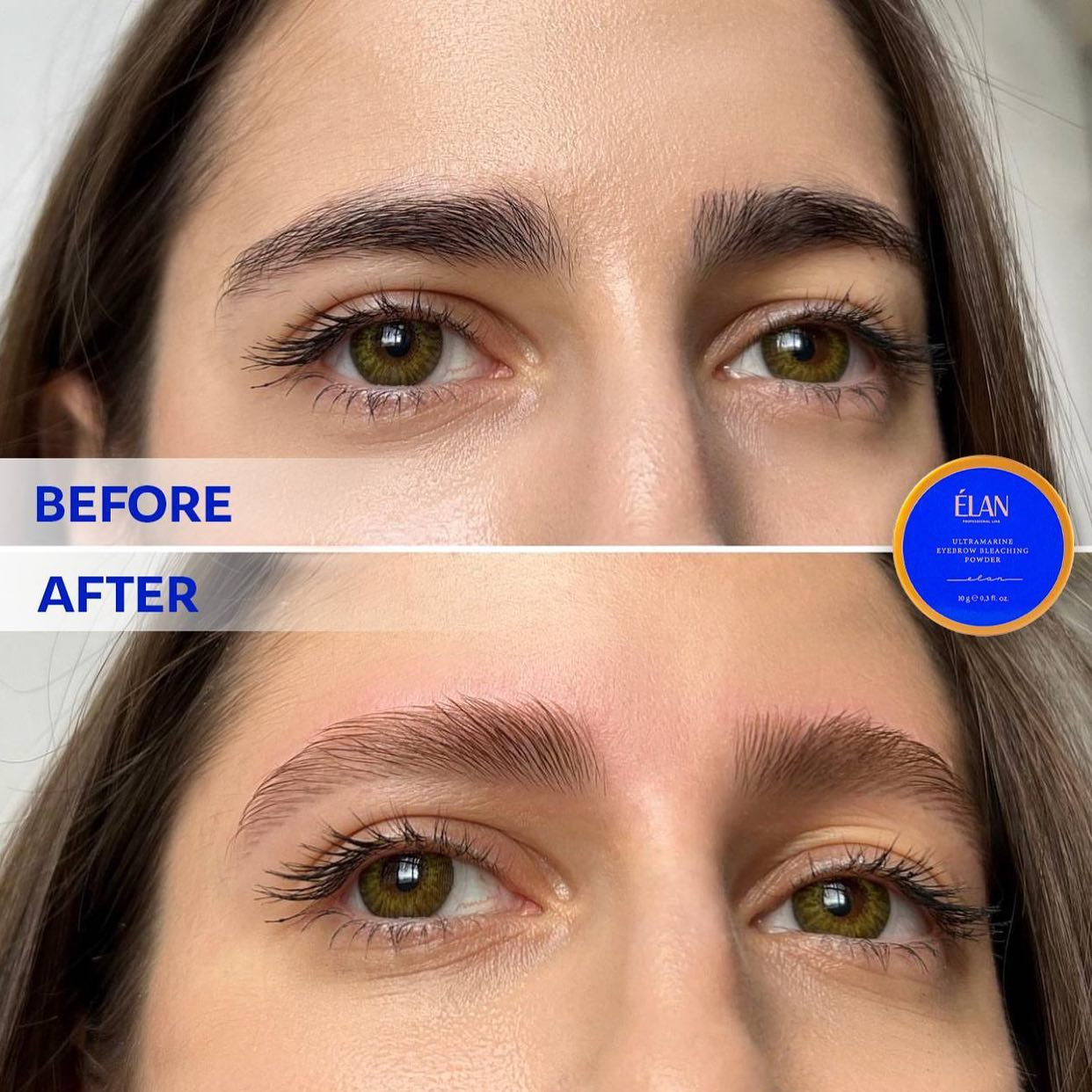
Elan Ultramarine Powder
A gentle powder for lightening natural hair or working with previously tinted eyebrows.
It works more gently with the 3% SBTS oxidizing emulsion than with the classic Elan 3% oxidant. It can be used with a 6% oxidant for stronger lightening (maximum exposure 20 minutes).
The powder is mixed with Elan oxidant in a 1:3 ratio (1 part powder + 3 parts oxidant). Typical exposure time is from 3 to 7-10 minutes. After lightening, you can tint immediately, having previously applied eyebrow conditioner for 10 minutes. After eyebrow lightening, the tint exposure time is reduced by half.
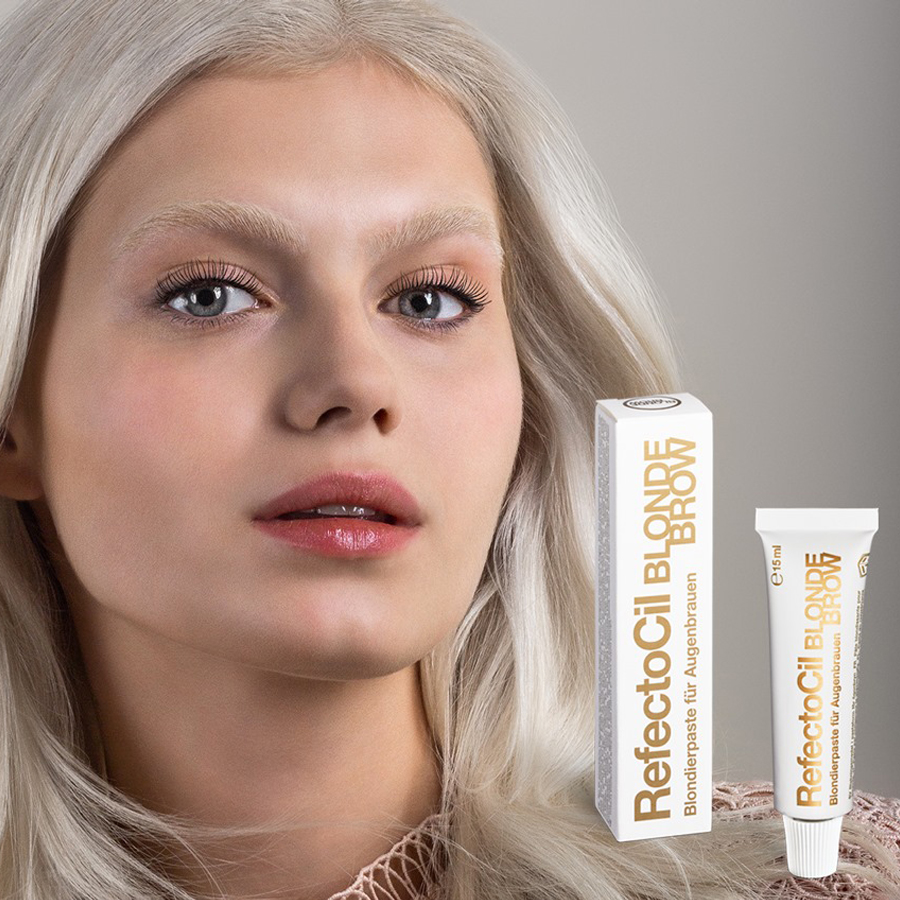
Refectocil Blonde Brow Lightening Paste
Ideal for lightening dark eyebrows and color correction of natural and previously tinted brows. It allows lightening eyebrows up to 3 tones.
Must be used with Refectocil 3% cream developer. Mix 2 cm of Refectocil Blonde Brow paste and 20-25 drops of oxidant. Be sure to mix the composition thoroughly until completely smooth. Exposure time is from 5 to 20 minutes, depending on the desired level of lightening.
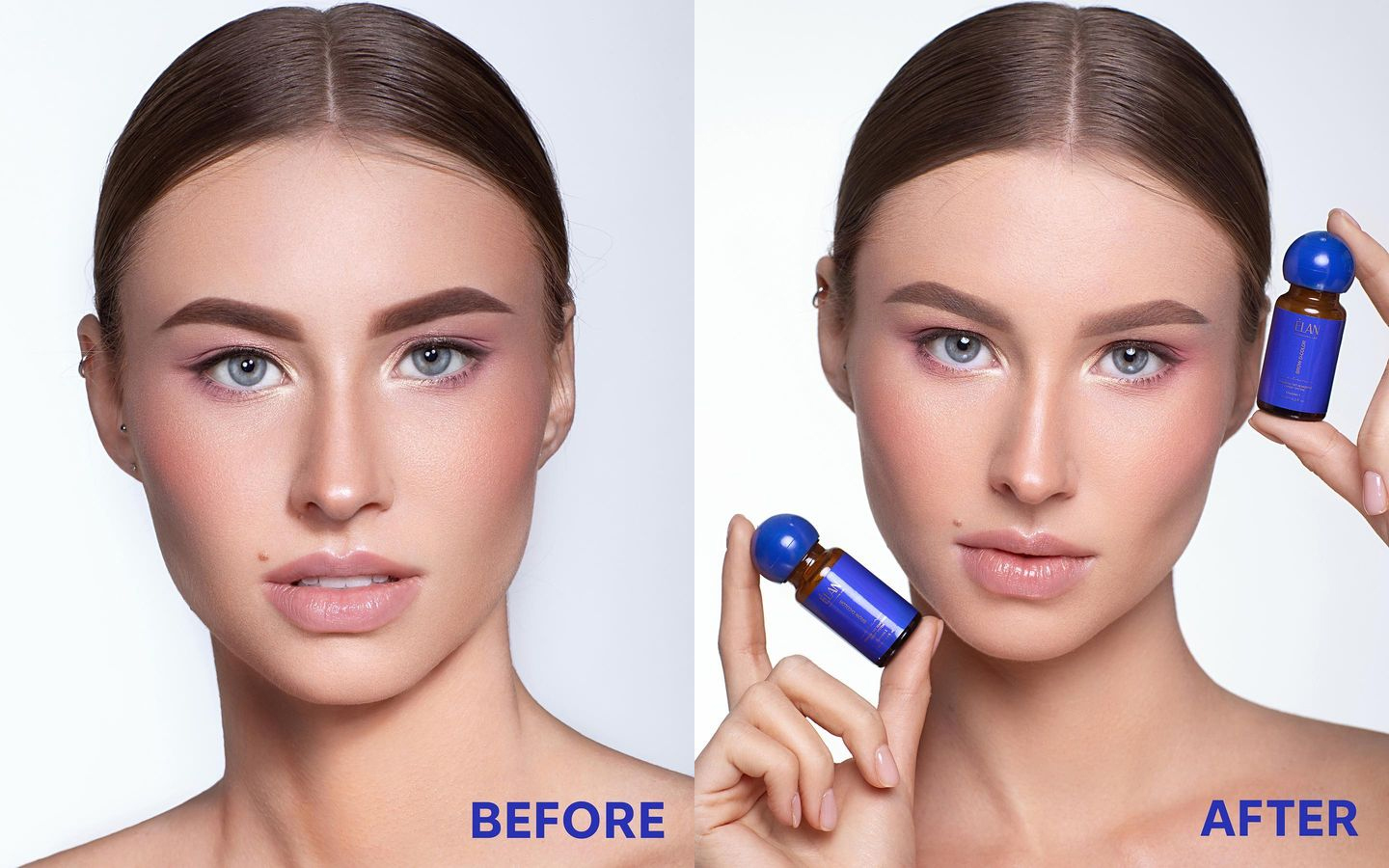
Eyebrow Tint Removal (Color Decap)
Brow artists often face the need to wash artificial pigment out of the hair structure. The reasons vary: unsuccessful previous tinting, an overly dark shade, an undesirable undertone, or the client's simple wish to return to their natural shade.
For this, there is a special procedure — color removal, which opens the hair cuticles and removes artificial pigment without affecting the natural one.
The most popular products among brow artists for eyebrow tint removal:
- Elan D-Color Expert System;
- Levissime Eyebrow Color Out corrector.
The principle of these products is similar. The product consists of two components that must be mixed in a 1:1 ratio and applied to the eyebrows. The exposure time for the compositions is from 5 to 15 minutes.
How to Dilute Eyebrow Tint Shades?
Sometimes a certain tint shade suits you perfectly, but you want a less saturated result. For this, there are special products — adjusters for diluting the tint color. Essentially, it is a transparent dye that dilutes the main pigment of the tint. For example, the Nikk Mole brand has a special Adjuster for color regulation. It can be added to the dye in different proportions to dilute the shade.
Always calculate the correct ratio of oxidant when using adjusters. The proportions of tint + adjuster with oxidant should be 1:1.
We're leaving links to all the products from the blog for you. Bye-bye!