Zola is a true bestseller among eyebrow and eyelash dyes. In this blog, Olena Burlachenko will discuss the specifics of working with Zola dye, break down the color theory and shade palette, and share popular commercial mixes.
Hello, beauty hunter kitties!
Today it's me, Olena Burlachenko, brow artist and instructor at Beauty Hunter LAB, and we will be talking about one of the most in-demand dyes — ZOLA eyebrow and eyelash dye. In this article, you will learn about the features of Zola dye, color theory, and the most popular mixes.
Specifics of Working with Zola Dye
The Zola brand is one of the most progressive on the Ukrainian market. Its range includes many cool, essential products: lamination compositions, skin preparation products for tinting, and a wide variety of accessories for brow artists, lamimakers, and makeup artists.
The brand's true bestseller is the dye with a new formula and two oxidants.
We are going to figure out what kind of "beast" this is and how to handle it.
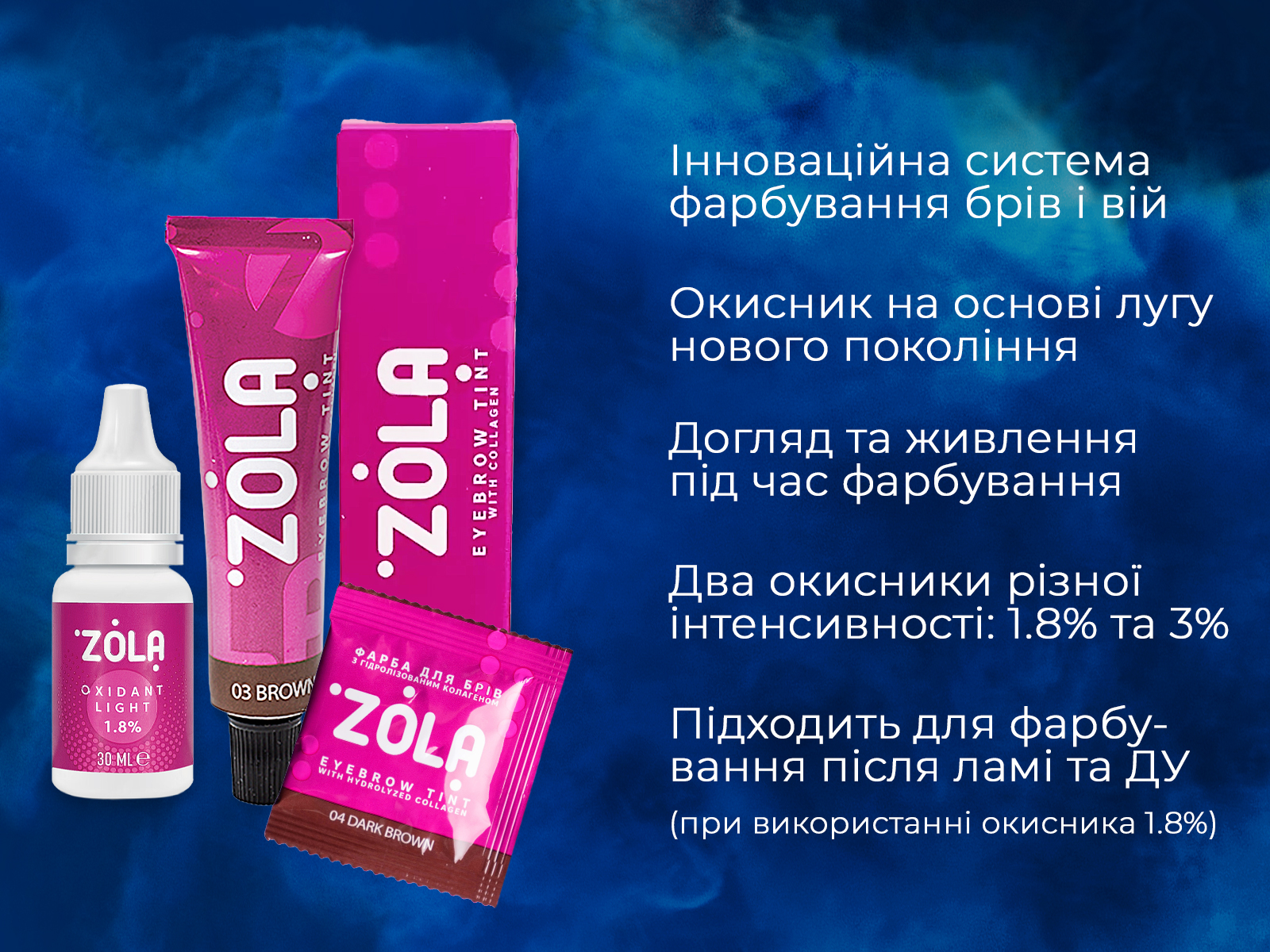
Zola dye has several features that fundamentally distinguish it from others:
The dye is pre-pigmented. This means it is incredibly convenient for both beginners and experienced professionals. It is also a big plus for instructors, as it is much easier to visually explain the entire process to a student.
New dye oxidation technology. In Zola's brow and lash tinting system, a new generation of alkali (DMAMP ULTRA PC) is used instead of ammonia. This allows for soft and gentle hair tinting while leaving a bright, juicy stain on the skin and hair by increasing the amount of pigments.
Additional care and nutrition during tinting. The dye contains a large amount of care components that nourish and moisturize the hairs and skin, preventing dryness or dehydration during the process.
For example: hydrolyzed collagen improves hair flexibility and elasticity while helping to reduce porosity. Lanolin moisturizes and nourishes dehydrated skin.
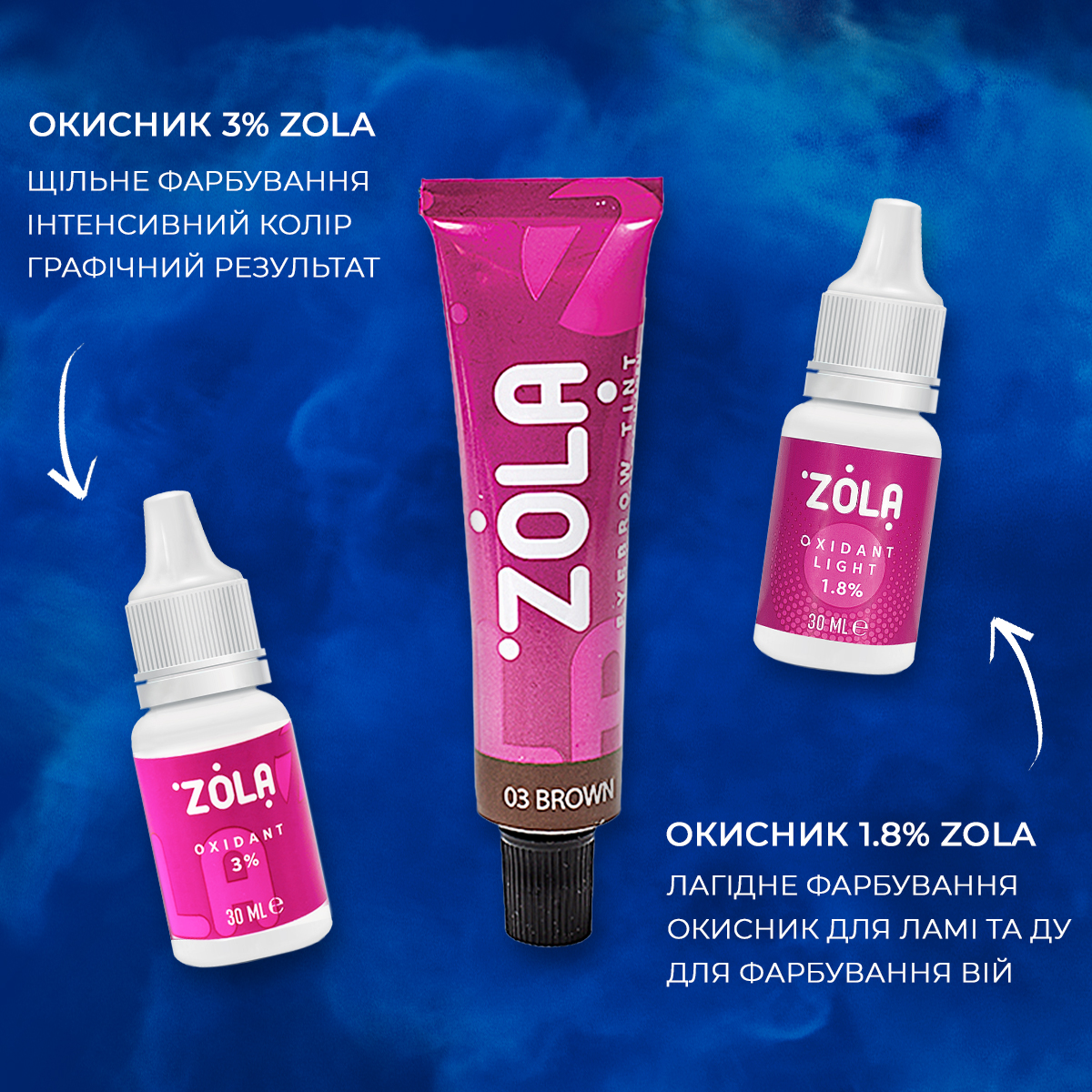
Expanded usage possibilities. One of the advantages of the Zola tinting system is the availability of two oxidants (3% and 1.8%), which broadens the scope of work.
The 3% oxidant provides a good stain on the skin and long-lasting color, including on gray hairs. However, the manufacturer does not recommend using this oxidant after lash lamination or long-term brow permeation, nor for tinting eyelashes.
The 1.8% oxidant, on the other hand, makes the dye even gentler and allows for usage after lash lamination and long-term brow permeation. This oxidant allows for a good skin stain without over-darkening the hairs.
Zola Dye Color Theory
Let's talk specifically about the dye itself: color theory, formats, and mixes.
Zola offers two dye formats: tubes and sachets. I consider this a significant advantage — it gives you the chance to try something new without buying a full-sized format.
The shelf life of the dye when sealed is 3 years from the date of production, and 3 months after opening. Although, I am sure you will use it much faster — it creates masterpieces for your Instagram.
Zola Dye Shade Palette
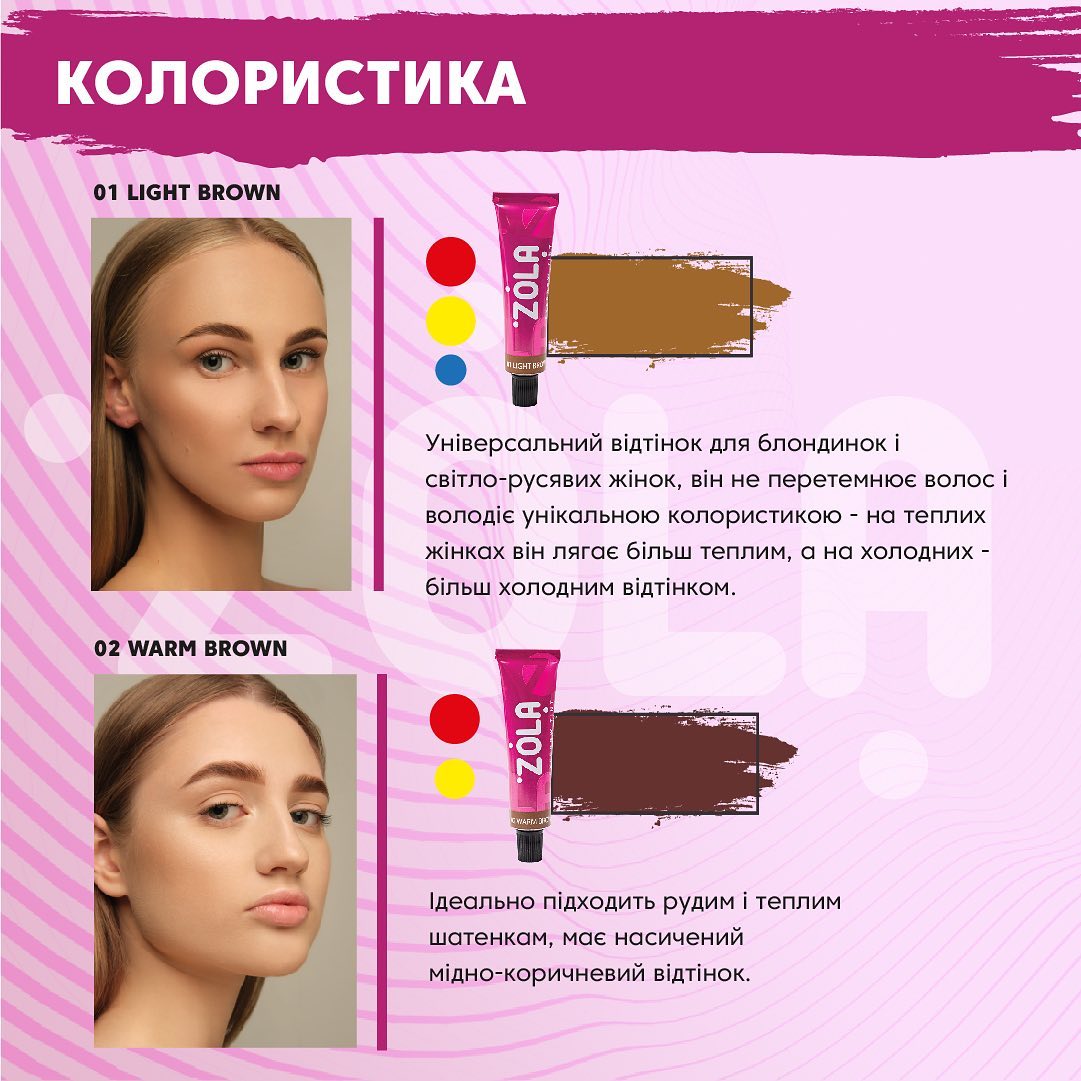
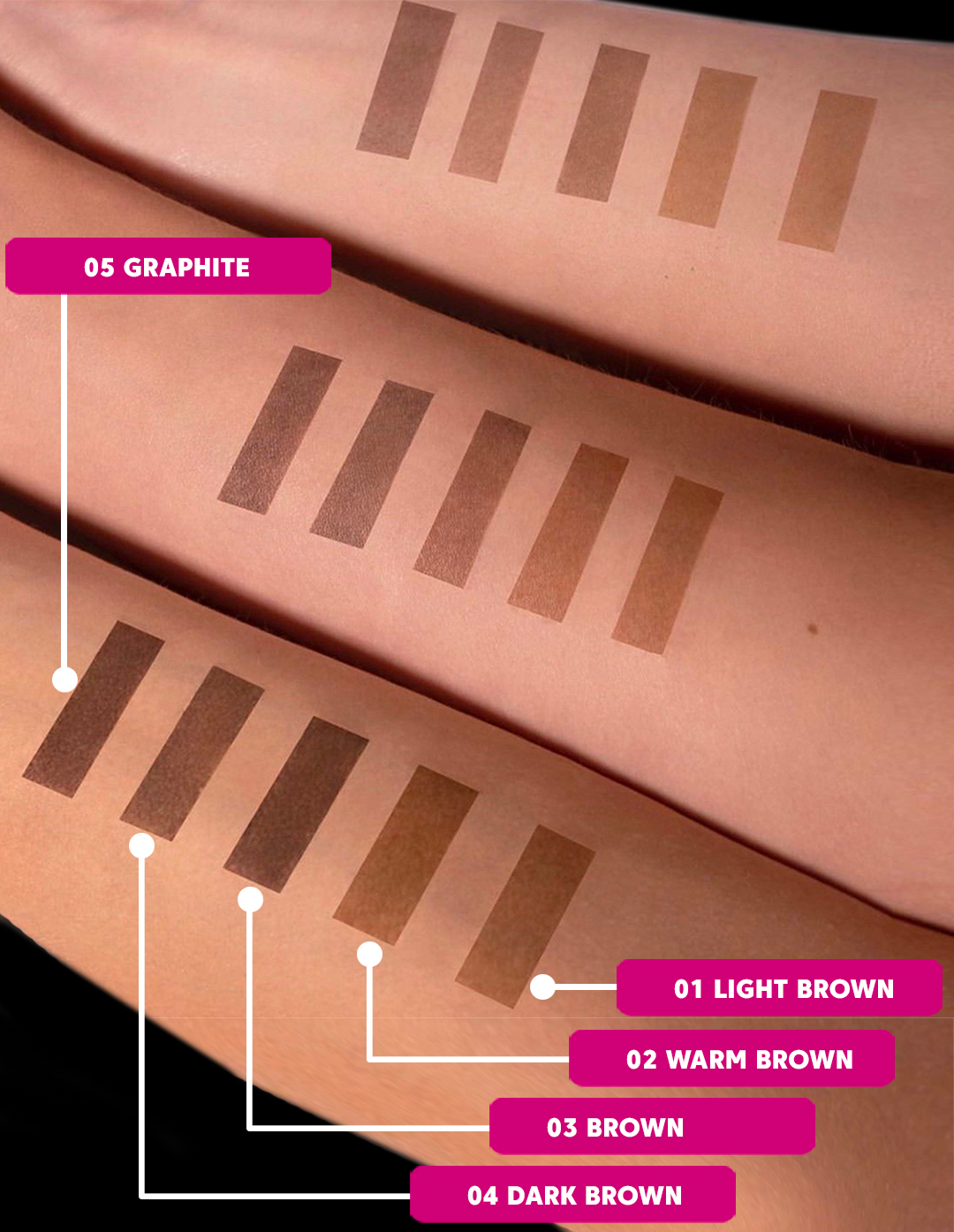
- 01 LIGHT BROWN - a neutral color nuance. Accordingly, it will appear warm on "warm" girls and cool on girls with a cool undertone. Perfect for light blondes.
- 02 WARM BROWN - warm brown with a copper color nuance. Ideal for adding warmth to any other shade. The perfect ginger (suitable for redheads).
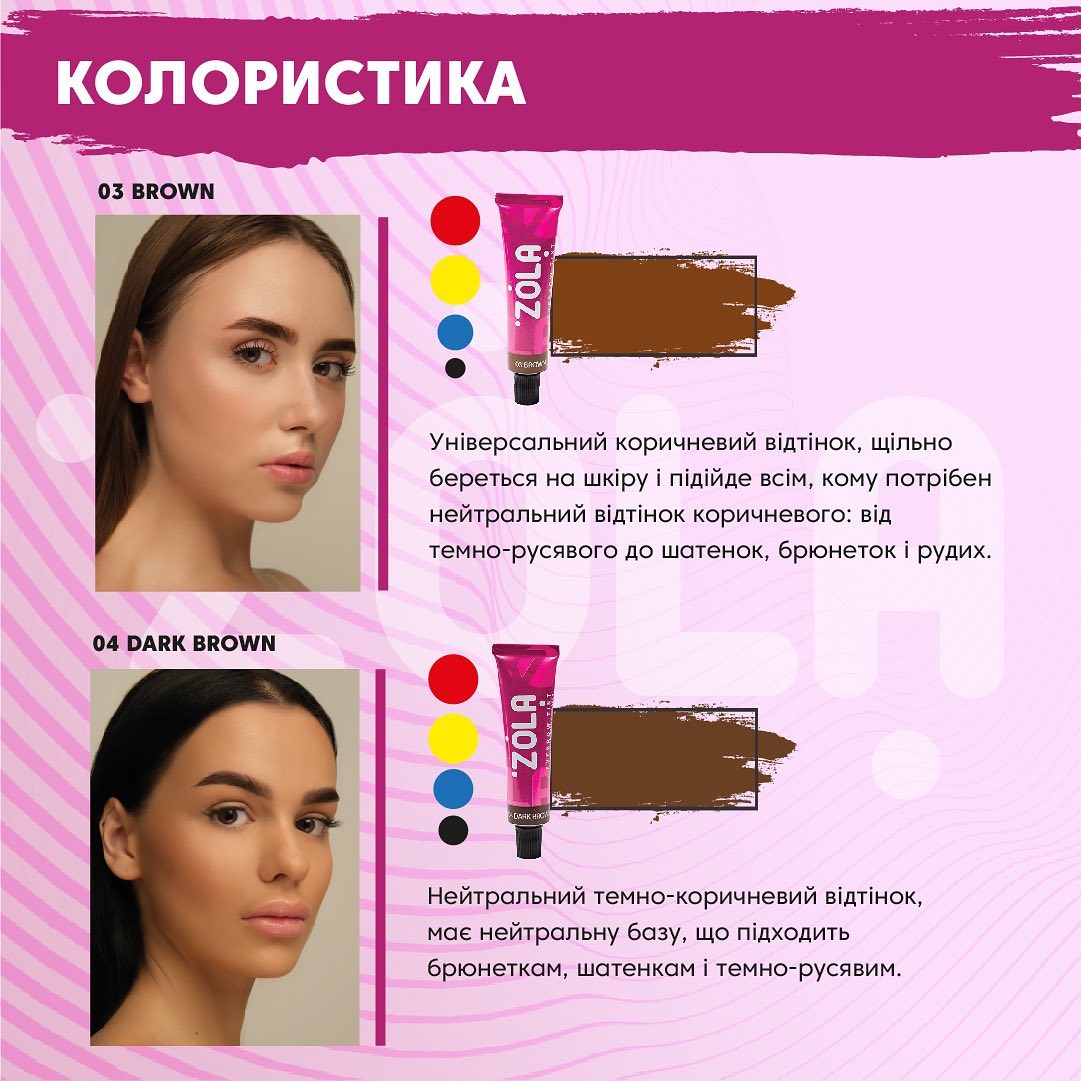
- 03 BROWN - brown on a natural green base. Suitable for brunettes.
- 04 DARK BROWN - dark brown. Built on the same base as "Brown" but more saturated. Suitable for bold brunettes and dark-haired girls.
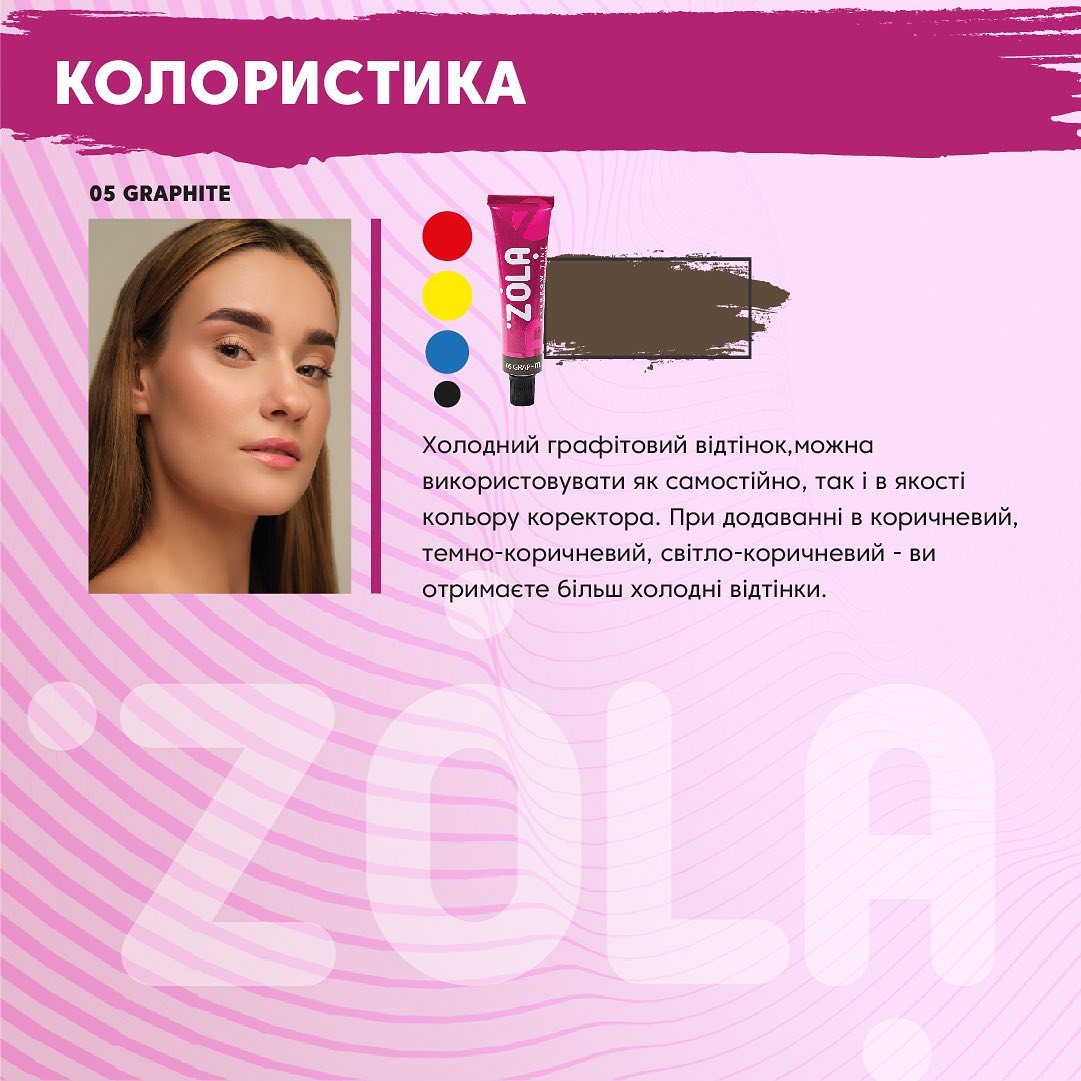
- 05 GRAPHITE - saturated gray on a blue base. Best not used in its pure form, but ideal as a mix-tone for any shade to deepen and cool down the base color.
-
06 BLUE BLACK - a deep black shade with a blue undertone. Ideal for tinting eyelashes after lamination.
Zola Dye Mixes
Here is a list of mixes for different color types of your clients.
For light-haired girls:
01 in pure form (it will achieve the necessary shade since it has a neutral nuance)
01+02 if warmth is desired - 80/20
01+03 for a cooler result - 90/10
Для dark blonde (light brown) girls:
01 - will look natural.
01+04 for more saturated brows - 70/30
01+05 if you need a strong skin stain; the hair will also become saturated - 80/20
For dark-haired girls who don't like bold tinting:
03+01+05 - 45/45/10
For brunettes and brown-haired girls:
03 - neutral brown (universal)
For a more saturated color, you can add 02 to make the color warmer and juicier, or 05 to make the color deeper and darker.
04 - for saturated yet more natural shades.
05 - for creating deeper and more saturated colors.
A few life hacks for working with ZOLA dye:
- Shades 01 Light Brown, 02 Warm Brown, and 03 Brown practically do not over-darken the hair. If you are afraid of darkening the hair, work only with these and apply in a thin layer.
- If working with porous hair or after brow permeation (DU), use the 1.8% oxidant and apply in a thin layer.
- The dye has a relatively low Depth Level (DL), which is exactly what allows for sharp graphics on the skin and ensures long-lasting wear.
This is all the basic information you need to work with Zola dye and achieve "wow" results. Try it, test it, get inspired, and create.
Love you all,
Pooh (Pukh)!